The Great Migration
Nobody can tell you the date. Here is what they can tell you.
The herds follow rain, and rain does not read calendars. What you can plan around is where they usually are each month — and a trip that is worth taking whether or not you see a crossing.
- In the Mara
- Usually July – October
- Best crossing odds
- August – September
- Minimum nights
- 3, and 4 is better
- Book ahead by
- 6 – 12 months
Long-run patterns, not forecasts. The herds shift by weeks each year and no operator can promise you a crossing.
The model
A loop, not an event
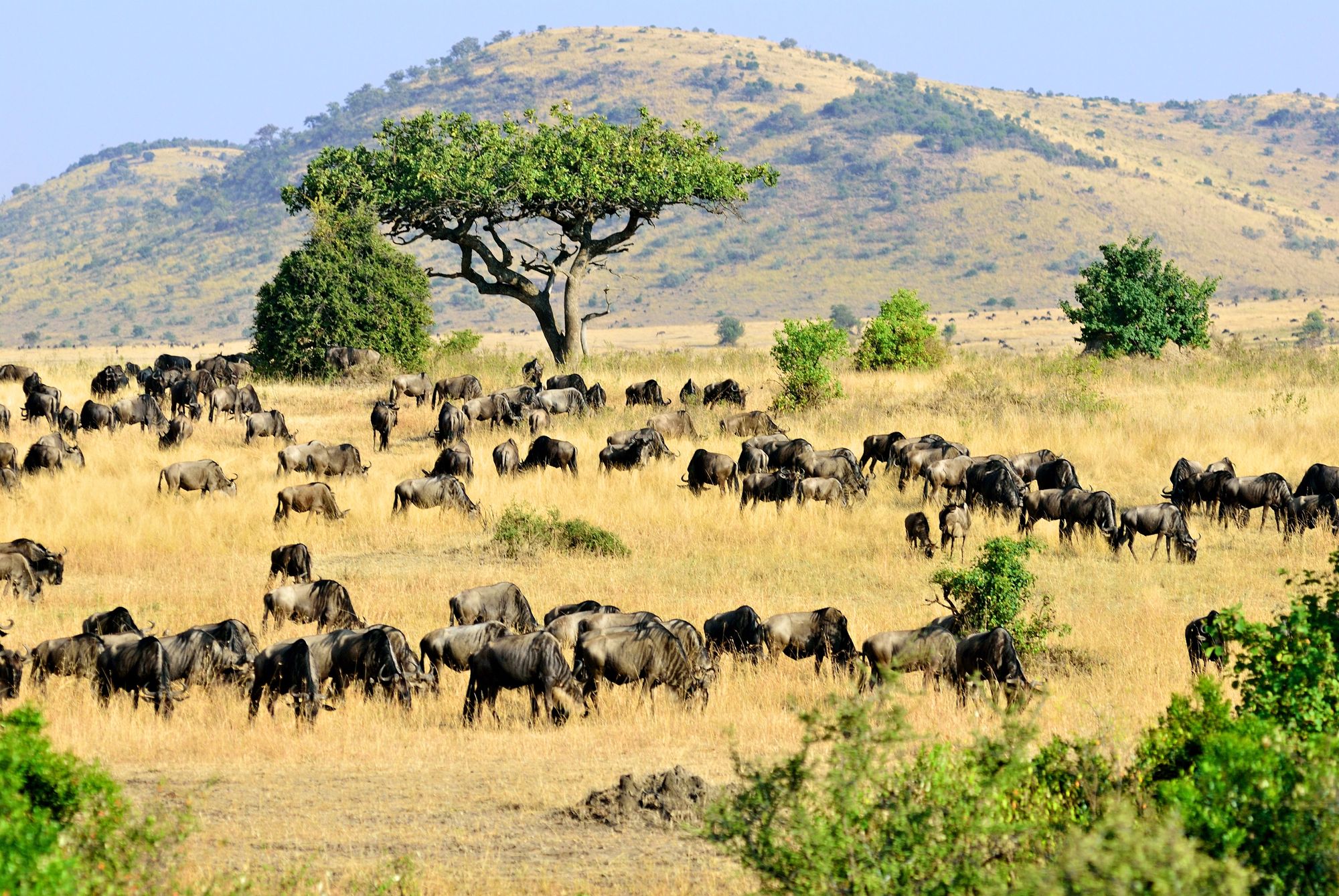
The herds move in a roughly circular, roughly annual loop around the Serengeti–Mara ecosystem, following rainfall and the grazing it produces. Most of the loop is in Tanzania.
The Masai Mara is the northern extreme. The herds reach it when the southern grazing runs out — generally July — and head back when the short rains restore it, generally from late October.
Once you hold that picture, "when is the migration?" becomes a question you can answer for yourself.
- Roughly a quarter of the year is spent in Kenya
- Arrival and departure shift by weeks, not days
- River crossings happen inside the national reserve
- The rest of the year Kenya is still excellent — and much cheaper
The year
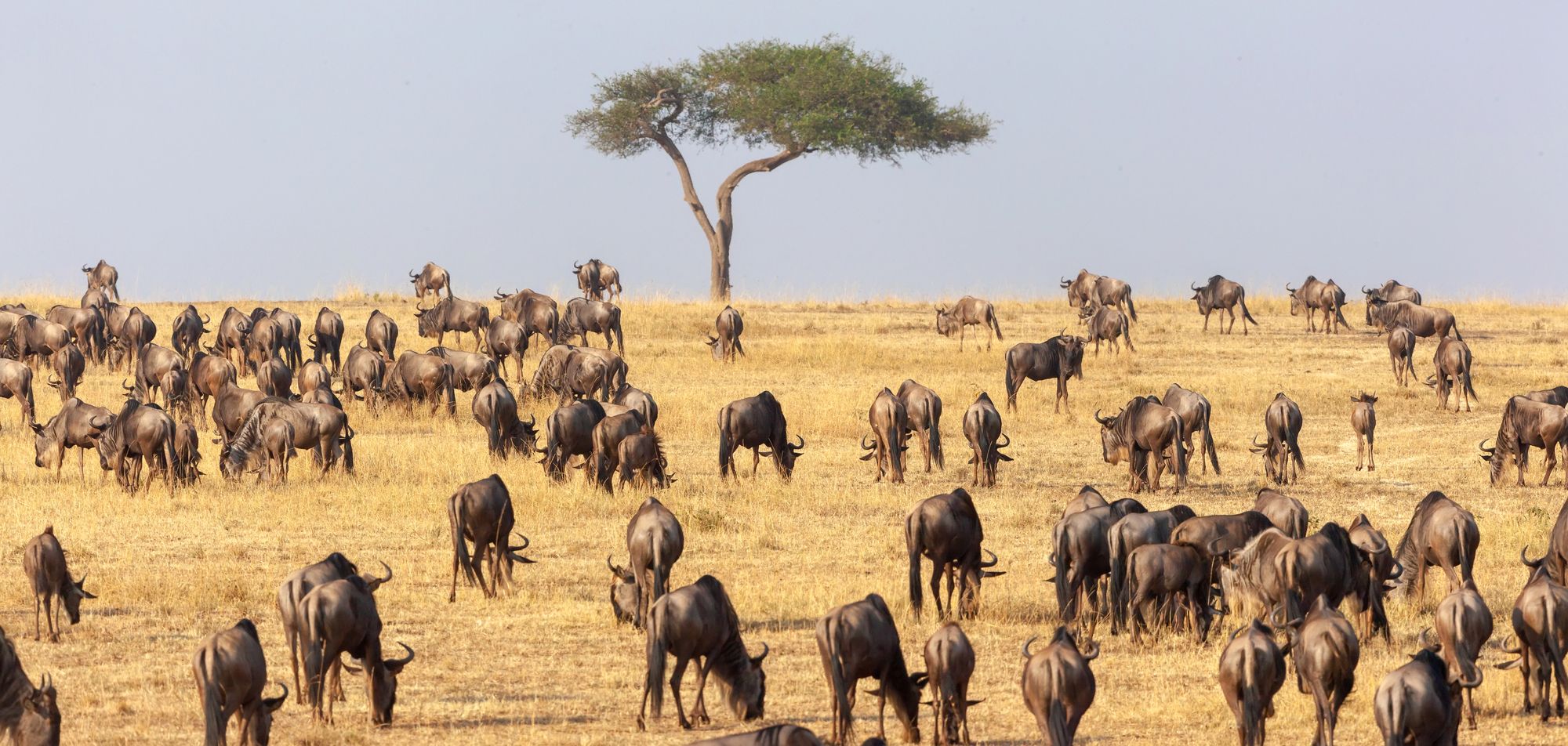
Where the herds are, month by month
Long-run patterns. Use them to choose a window, not to book a specific morning.
| Month | Herds | Weather | What it means for your trip |
|---|---|---|---|
| January | In Tanzania (calving) | Hot, dry, green underfoot | Excellent resident predators, very few vehicles, good value |
| February | In Tanzania (calving) | The driest month in much of Kenya | Superb light, concentrated game around water |
| March | Tanzania, starting north | Building to the long rains | Quiet and cheap in the first half |
| April | Tanzania, moving north-west | Long rains — the wettest month | Cheapest of the year. Some camps close. Roads difficult. |
| May | Tanzania, western corridor | Long rains tailing off | Very cheap, emptying of visitors, superb birding |
| June | Northern Serengeti | Drying, cooler | Kenya at its greenest with the rain gone. Prices climbing late in the month. |
| July | Usually arriving in the Mara | Dry and cool | First crossings. Prices step up sharply. Book far ahead. |
| August | In the Mara — peak | Dry and cool | Best crossing odds, and the busiest the reserve gets |
| September | In the Mara | Dry | Herds present, slightly fewer vehicles than August. Often the best month. |
| October | In the Mara, then south | Dry, warming | Very good early, quieter through the month, prices easing at the end |
| November | Back in Tanzania | Short rains, brief storms | Dramatic skies, great value, migrant birds arriving |
| December | Tanzania (southern plains) | Short rains easing, hot | Quiet and good value until about the 20th, then Christmas rates |
The herds follow rain. Timing shifts by weeks from year to year, and nobody can tell you otherwise honestly.
Go deeper
The three things people get wrong
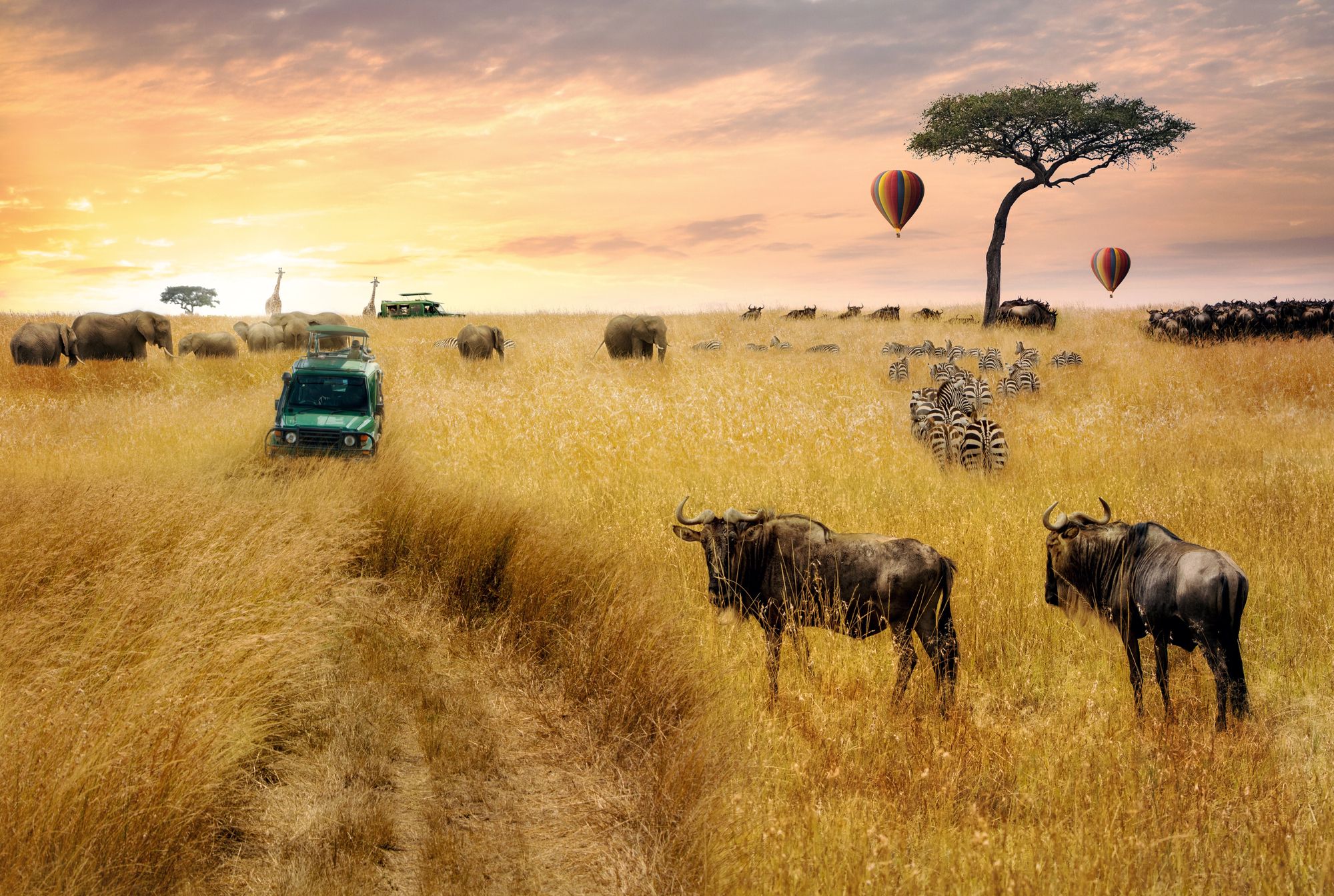
Expecting a schedule
What a crossing actually requires, why it cannot be booked, and what the odds really are by month.
How crossings work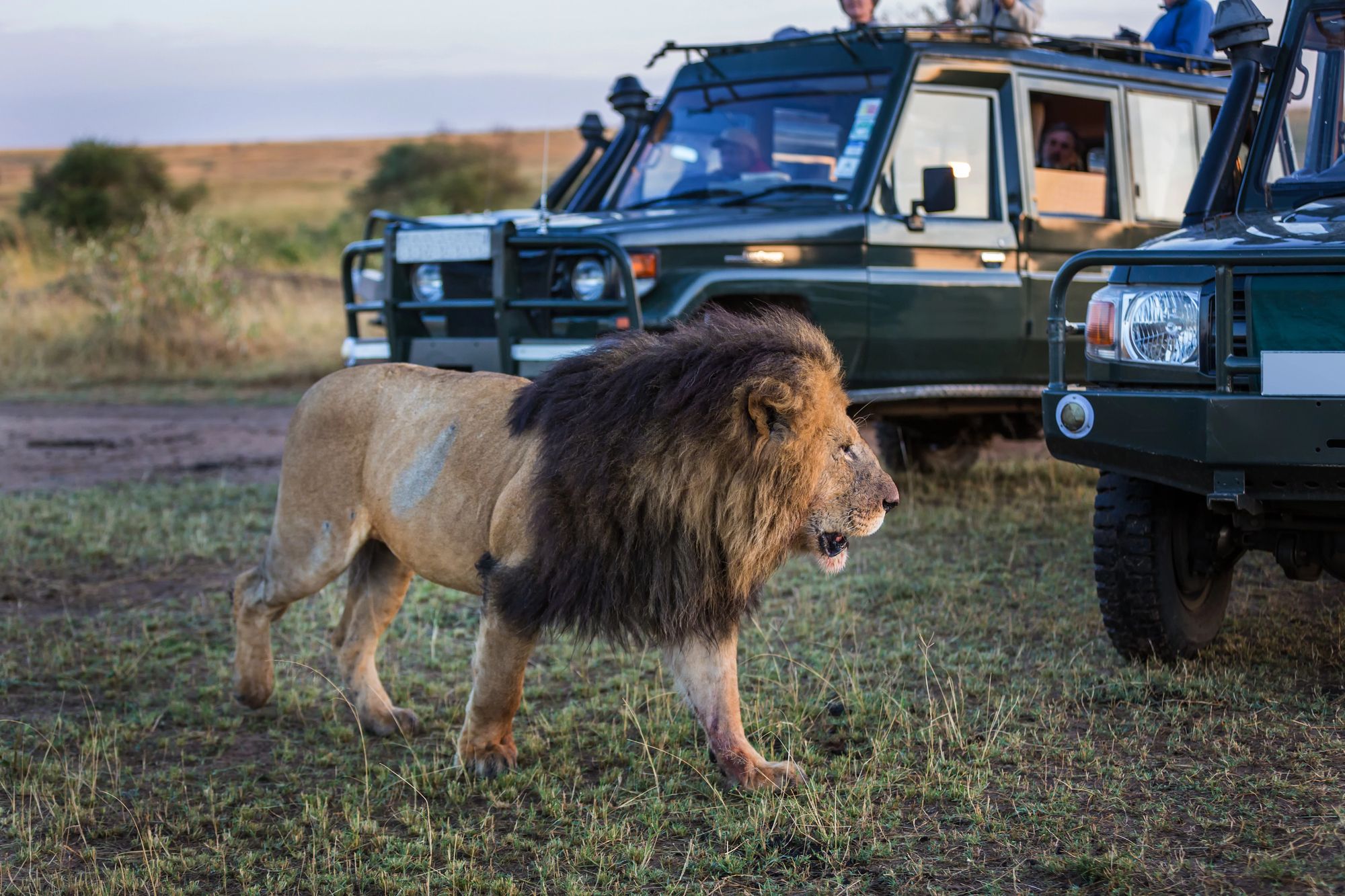
Staying in the wrong place
The crossings are in the reserve. The quiet is in the conservancies. In season those pull opposite ways.
Where to stay
Booking too few nights
Two nights in August is peak prices for lottery odds. Three is the floor and four is materially better.
How long you needFree download
The Migration Timing Guide
Where the herds generally are each month, what has to line up for a crossing to happen, and how to build a trip that is good whether or not one does.
- The migration as a loop, not a date — the mental model that makes planning work
- Month by month: where the herds usually are and what that means for you
- What a river crossing actually requires, and why nobody can schedule one
- Crossing odds by month, stated as odds rather than promises
- Reserve or conservancy in crossing season — the trade, priced
- How many nights you need, and why three is the floor
- The five mistakes that ruin migration trips
- A worksheet for picking your fortnight
No cost, no obligation. We ask for an email so we can send it and, if you want it, follow up once.
In their words
What travellers say
No reviews are shown because none have been supplied yet. Add them to
shared/placeholders.mjs → testimonials, using the traveller's real
name, month of travel and written permission. This block renders automatically once the
array is non-empty. Nothing invented is ever published here.
Before you ask
The questions we get most
When exactly is the migration in the Masai Mara?
Generally July to October, with the best river-crossing odds from late July through September. That is a long-run pattern rather than a date.
Anyone who gives you a firmer answer than that is either guessing or selling. The herds move on rain.
Will I definitely see a river crossing?
No. Three or more nights in the reserve in season gives you a fair chance and four gives you a good one, but herds mass on a bank for hours and then decline to cross.
Plan a trip you would be glad of even if you never saw one. That way a crossing is the bonus it actually is.
Is it worth coming to Kenya outside the migration months?
Yes, and for many people it is the better trip. Resident lion, leopard, cheetah, elephant and buffalo do not leave. January and February give you excellent predators at a fraction of the price and a fraction of the vehicles.
The migration is a spectacle. It is not the only reason to come, and in peak season you pay a lot for the privilege of sharing it.
Masai Mara or Serengeti for the migration?
Same ecosystem, different countries. The Mara is more compact, so the herds concentrate in a smaller area and big-cat density is high. The Serengeti is far larger and holds the herds for much more of the year. If you are choosing Kenya, July to October is your window.
How far ahead should I book?
For July to October — the migration months in the Masai Mara — six to twelve months is normal, and the best small camps sell out first. Christmas and New Year book up just as early.
For the shoulder months, three to four months is usually comfortable. Inside eight weeks we can still put a very good trip together, but you are choosing from what is left rather than from everything.
Start planning
Tell us the window you can travel in
We will tell you honestly what the herds are usually doing then, what it will cost, and whether shifting by a fortnight would give you a materially better trip for the same money.
Our Kenya specialist replies within 24 hours with a plan and an itemised quote.
- An honest read on crossing odds for your specific dates
- Named camps, with how far each is from the river
- A plan that still works if the herds are late
- The cheaper alternative, if your dates fall outside the season
Who answers
Nomad Africa, our partner travel agency in Nairobi, builds and prices every itinerary we send. You deal with one team, on the ground, for the whole trip.
Licence and membership numbers appear here once filled in at
shared/placeholders.mjs → partner. Nothing is claimed until it is verified.
Get your tailored itinerary and quote
Our Kenya specialist replies within 24 hours with a costed plan built around your dates.
More from our Kenya guides
Specialist guides across our Kenya network
Each of these is a focused guide we publish. Same Kenya specialist behind every enquiry.